1 min read
The Restart of Wage Garnishment is Here
After a five-year pause, the Department of Education (ED) announced on December 23, 2025 that it will officially resume administrative wage...
3 min read
Tuition.io
:
Jul 9, 2025 8:00:00 AM
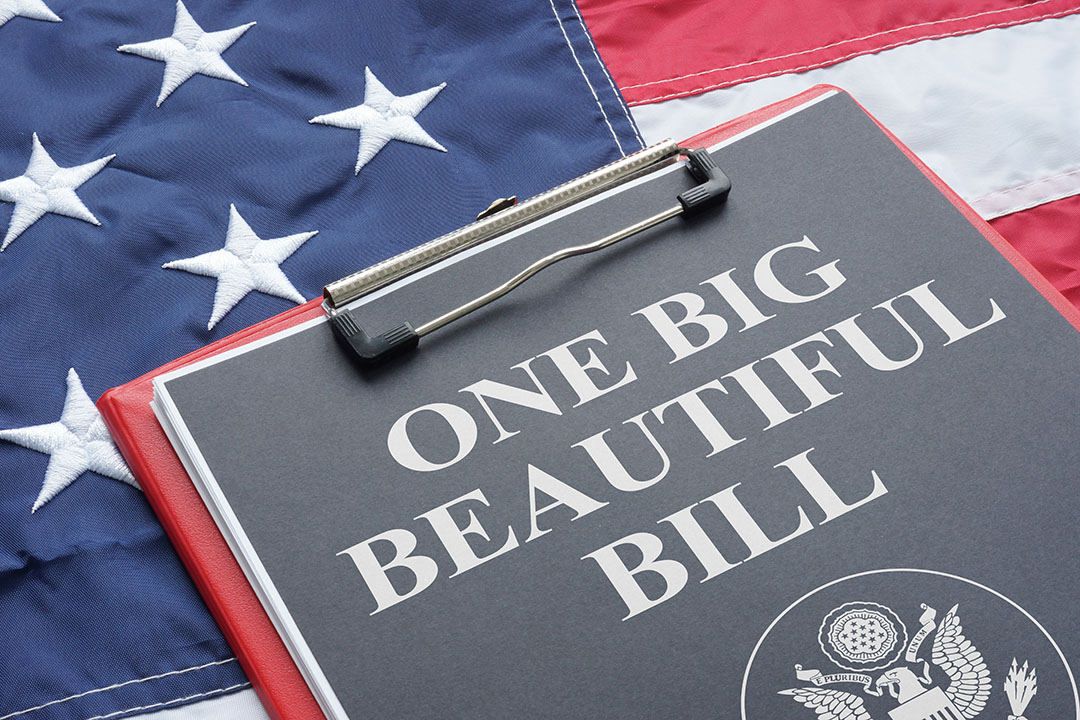
The One Big Beautiful Bill Act has passed and all provisions are now law— including Public Service Loan Forgiveness protections, tightening of income-driven repayment plans, new federal student loan borrowing caps, broadening of 529 Plan usage, and expanded tax-incentives for employer-sponsored education assistance benefits.
This special industry briefing summarizes the 5 key impacts to employers and employees regarding student loan repayment, higher education costs, and funding options.
Employees at qualifying organizations can still access forgiveness after 10 years of full-time employment. Qualifying organizations include non-profit healthcare systems, K–12 public education, public universities, government agencies, tribal entities, and other 501(c)(3) organizations. Teacher Loan Forgiveness also remains fully intact. Loan amounts forgiven under PSLF and Teacher Loan forgiveness remain permanently tax-free.
Separately, the Trump administration is pursuing regulatory changes that could restrict PSLF access based on an employer’s “mission or legal status,” potentially undermining future eligibility for some organizations. We do not foresee any impact on the employers we serve.
The Act eliminates the most affordable repayment plans for federal student loans. Starting in July 2026, all new loans or payment plan updates are limited to the Standard 10-year plan, the Income-Based Repayment plan (IBR) or the new Repayment Assistance Plan (RAP). In virtually all cases, monthly payments and lifetime obligations will increase relative to current options. Borrowers that choose RAP will be locked into the plan for the life of the loan.
Smart Actions: Borrowers can still enroll in Income-Driven Repayment (IDR) plans through June 2026 and be grandfathered into these more affordable options until July 2028. Borrowers already on an IDR plan (SAVE, PAYE, ICR) are also grandfathered until July 2028 if their loans stay in good standing.
This Act reduces federal funding for families and narrows their borrowing options starting in July 2026:
Parent PLUS Loans will have an annual cap of $20,000 per child and a $65,000 lifetime borrowing limit (currently unlimited up to the cost of attendance).
Parent PLUS loans originating after June 2026 will not be eligible for Public Service Loan Forgiveness.
Complication: The reduction in federal funding comes at a time when college costs have outpaced inflation for decades. Furthermore, recent cuts in federal support to universities have triggered additional tuition and fee increases at major institutions nationwide — compounding the financial strain on families and limiting access to higher education.
For employers, the legislation solidifies tax-advantaged options to support workforce education:
Student Loan Repayment Assistance and Tuition Assistance benefits are now permanently tax-free under Section 127 of the IRC to both the employee and the employer (up to $5,250 per year).
This $5,250 limit will now be indexed for inflation, marking the first adjustment in nearly 40 years.
The IRC continues to support Student Loan Retirement Matching through Secure 2.0 Act provisions.
Public Service Loan Forgiveness and Teacher Loan Forgiveness remain tax-free.
For employees, the legislation expands 529 Plan usage:
Qualified expenses now include K-12 tuition (public, private, or religious).
Cash distribution limits increase from $10,000 to $20,000 per beneficiary.
These expansions are effective for the 2026 tax year and beyond.
Employees still have time to switch to more affordable repayment plans and protect their eligibility for future loan forgiveness, but they must act now:
Borrowers can still enroll in more favorable repayment plans through June 2026 and be grandfathered into lower payments until July 2028.
Parent PLUS loan borrowers seeking to minimize payments must consolidate into a Direct Consolidation Loan and select the ICR plan before July 2026 and then after July 2026 choose the Income-Based Repayment plan.
Parent PLUS loans that are not consolidated before July 2026 will be permanently ineligible for income-driven options.
Parent PLUS loan borrowers working for a nonprofit employer can still qualify for Public Service Loan Forgiveness, but only if they consolidate into a Direct Consolidation Loan and enroll in the ICR plan before July 2026.
As wage garnishment and forced debt collections on federal student loans resume, the One Big Beautiful Bill Act is set to deepen the financial burden on the U.S. workforce. The legislation introduces structural changes that will significantly raise the long-term cost of student debt and higher education. At the same time, sweeping revisions to repayment programs are adding new layers of complexity, making it harder for employees to understand their options and take informed action.
Employees of our clients have:
Access to expert-led webinars - View Upcoming and On-demand Sessions
Support with proactive employee communications
Employers have expanded tax-advantaged options to provide education assistance to employees including student loan contributions, student loan retirement matching, tuition assistance and Public Service Loan Forgiveness support. Schedule time or email info@tuition.io to explore options for your workforce.
Tuition.io is the leading employer-sponsored financial wellness platform specializing in student loan benefits and tuition assistance administration. We help employers hire, retain, and upskill talent by addressing the dual challenges of historic student debt and the ROI of higher education.
Our Industry Briefings are intended to help employers, benefit brokers and advisors, record keepers, and other workforce professionals be informed about trends in the dynamic areas of student loan debt, higher education, and their impact on the U.S. workforce. Visit Tuition.io and subscribe.
1 min read
After a five-year pause, the Department of Education (ED) announced on December 23, 2025 that it will officially resume administrative wage...

1 min read
Since the election, many employers and benefit advisors we work with have asked our opinion on the state of Student Loan Debt under the incoming...
1 min read
The federal student loan system is in crisis — and your workforce is caught in the middle. Policy changes, court-ordered program shutdowns, and...